.png)
You're Not Paying for a Methodology. You're Paying for Experience.
Let's be honest about something…
Between us, we could offer you a lot of things; project management, process mapping, business case development, financial modelling, stakeholder engagement frameworks, model of care development, clinical training. These are real qualifications, real skills, and genuinely valuable capabilities.
But that's not what HI is and understanding the difference matters.
The transactional model
A lot of professional services work is transactional.
You identify a need.
You find someone with the matching skill.
You pay for a defined output.
A project manager to run your programme. A consultant to map your processes. An analyst to build your model. These offerings are valuable and there are excellent people who provide them. However, in our experience, organisations rarely have a simple, neatly defined problem. In health and disability, problems are complex, messy and human - sitting at the intersection of real life, clinical reality, operational pressure, funding constraints and sector reform.
A methodology unfortunately won't save you there. But embedded, senior experience might.
The context problem
Jacque has hired project managers from well-respected consultancies. They knew their frameworks, ran clean plans, managed their Gantt charts and hit their milestones.
But often something was missing - the context to the project they were managing, an understanding of why things worked the way they did, or why a perfectly logical recommendation would never actually land with the current leadership of the organisation.
That's not a criticism of those project managers. It's a structural limitation of transactional capability. When you buy a skill, you get the skill. You don't automatically get the twenty years of pattern recognition that sits behind it, or the lived experience of what it actually feels like as the customer.
Senior experience isn't a qualification. It's an accumulation of everything, including what you do outside of work. It's the ability to walk into a room, read what's really happening, know what this organisation actually needs, and be able to say it and deliver it.
When the plan looks right but isn't
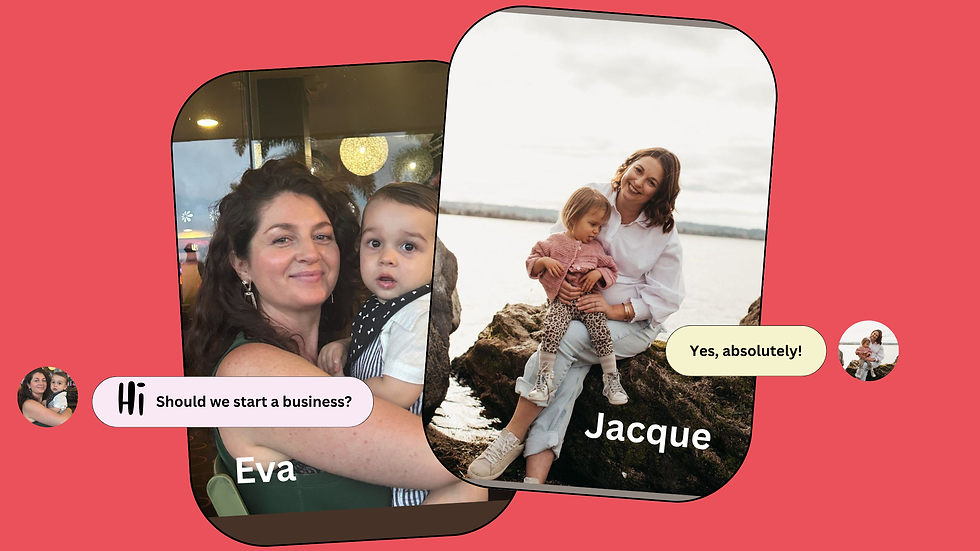
Eva knows this from a different angle entirely.
Recently, she was part of a project team tasked with redesigning a model of care for a health service in a large tertiary hospital. The project centred on streamlining the intake of new patients and revising a triage process, which needed clinical insight to get it right.
What Eva brought to the table wasn’t theoretical. She’s been there - with the patients, in real clinical situations. She also understands that when processes fail, the costs are high for the patient’s, their outcomes and the staff caring for them. Having that clinical insight meant the model worked. Without that frontline understanding, the risks to patient safety are not always fully visible.
That's what clinical experience brings to a room. Not just knowledge of how health systems work in theory, but an embodied understanding of what happens to real people when they the system doesn’t work in practice.
You can't teach that. You can't credential it. You can only accumulate it over years of showing up and doing the work.
The report that changed nothing
Jacque spent a decade in economic development and in that time, a lot of consultant reports landed on her desk. Great reports - good research, clear recommendations, presentations that landed well with everyone.
But then, more often than not, nothing changed.
Not because the recommendations were wrong, but because the consultant had moved on to the next engagement and there wasn't enough internal capacity to deliver on them. There was no one left to navigate the internal politics, build the buy-in, manage the implementation, or course-correct when reality didn't match the plan.
The report became a document in the drive, and the drive became full of money spent and problems unsolved.
This isn't a criticism of consultants as strategic advice has real value, and we love working in this space. But advice without implementation is just a well-articulated version of the problem you already had.
What organisations actually need and what HI is built to provide is someone who comes in after the thinking is done and makes it happen. Or better still, someone who thinks and delivers at the same time.
That's the difference.
What embedded actually means
This is why HI is built around embedding rather than just delivering.
When you engage HI, you're not buying a project manager who will run your plan. You're not buying a consultant who will apply a methodology and hand over a report.
You're getting two senior professionals, and in the future, more professionals with decades of combined experience across business, clinical practice and lived experience of disability, who come inside your organisation and apply all of that to whatever you're facing.
You can't unbundle it. You can't say "we just want the clinical bit" or "we just need the project management." It all comes into the room together. The business acumen, the clinical instinct, and the lived understanding of what it means to be on the receiving end of these services - they’re not separate products but one capability.
Think of it this way....
There's a difference between someone who has read every book about building a house, and someone who has built a hundred of them.
Both understand the theory. Only one knows what happens when things go wrong at 4pm on a Friday, and more importantly, how to fix it before anyone else has even noticed the problem.

So, who is HI for?
If you need a specific, defined deliverable - a process map, a project plan, a financial model, there are excellent people who provide exactly that, and you should find them.
But if you're leading a health or disability organisation and you have something more complex on your hands - a programme that needs to actually deliver, an operational challenge that keeps defeating you, a service you want to build but can't quite get off the ground and you need someone who can walk in, understand what's really happening, and help you get it done.
That's HI.
We work alongside you for as long as you need us and hand over when the work is embedded or you're ready to bring someone on full time. No gap between insight and action. Just senior people, inside your organisation, owning the outcome from start to finish.
Not a methodology. Not a deliverable.
Experience, embedded. and focused on outcomes that matter.
HI provides senior embedded delivery capability to health and disability organisations across Australia and New Zealand. To find out more, visit www.workwithhi.com or connect with us on LinkedIn.

Comments